
 EN
Essential Laboratory Glassware for Beginners
Starting a modern laboratory setup is much easier when you treat each piece of laboratory glassware as a highly specialized tool engineered for one distinct operational job. A borosilicate beaker that is exceptional for rapid mixing and thermal dissolution is not automatically the correct vessel for precise volumetric measurement. An Erlenmeyer flask that makes swirling and titration much safer is never designed to function as a permanent chemical storage bottle. This comprehensive guide provides beginners and laboratory managers with a practical, safety-conscious methodology to select core laboratory glassware items first, adding specialist tools only when an analytical method truly demands them.
From a working-lab perspective, the most useful question is never simply "Which glass item looks most professional on an open shelf?" Instead, professional technicians must ask precisely what the vessel must accomplish in the immediate next step of the analytical workflow. That disciplined mindset helps new laboratories avoid filling expensive storage cabinets with overlapping, redundant items and ensures they always have reliable, verified ways to measure, heat, transfer, and contain chemical samples safely.
Start with the Four Core Jobs Glassware Performs
Most beginner procurement lists fall cleanly into four distinct operational functions: holding or mixing liquids, making approximate visual observations, measuring exact liquid volumes, and carrying out specialized procedures such as controlled thermal reactions or gravity filtration. Keeping these functions completely separate makes your initial laboratory glassware kit much easier to design, maintain, and stock.
-
Hold and Mix: Borosilicate beaker and Erlenmeyer flask options are ideal for these tasks. Note that printed graduations are normally approximate; never rely on them for critical measured volumes.
-
Measure and Transfer: Graduated cylinder and high-precision pipette tools provide far better accuracy. Always choose the smallest practical capacity for superior readability and meniscus control.
-
Heat and React: Specialized borosilicate beaker and heavy-wall flask variants handle severe thermal shifts exceptionally well when matched to calibrated heating plates.
-
Filter and Separate: Specialist funnels and filter flasks should only be purchased when active laboratory procedures specifically call for them.
Choose Beakers for Mixing, Heating, and Approximate Volumes
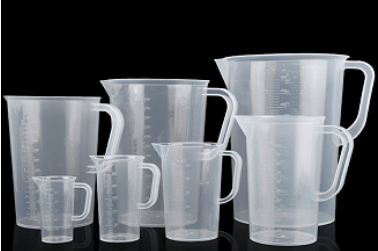
The borosilicate beaker is universally recognized as the very first item people picture when thinking about basic chemistry equipment. These versatile vessels are exceptionally practical for dissolving stubborn solids, mixing complex liquid solutions, collecting temporary samples, and performing gentle thermal heating when materials and procedures allow. Their wide opening makes adding dry powders and inserting mechanical stirring rods extremely convenient, while an integrated pouring spout ensures clean, drip-free liquid transfer.
The technical limitation matters deeply: the printed volume scale on a standard borosilicate beaker is intended strictly for rough estimation rather than a precise analytical result. If a formal protocol demands a strictly defined volume, measure it carefully using a suitable graduated cylinder or volumetric pipette before transferring it into the beaker. Selecting a proper vessel capacity based on your normal working volume—while leaving enough safe headspace for active stirring and splashing control—prevents common beginner mistakes.
Add an Erlenmeyer Flask When You Need Safer Swirling
An Erlenmeyer flask features a wide, stable base and a gradually narrowing conical neck. That unique geometric configuration is especially useful when a liquid must be vigorously swirled, mixed, or temporarily contained with significantly less splash risk than an open beaker. It serves as a sensible, highly reliable companion to any borosilicate beaker for general chemistry experiments, microbiological culture media preparation, and acid-base titration procedures.
Neither shape is universally superior in every laboratory context. A beaker allows much easier physical access with spatulas or magnetic stir bars, whereas a flask allows vigorous orbital swirling without accidental spills. Beginners should include both styles in their laboratory glassware inventory only when specific training exercises or protocols demand both types of fluid motion.
Use a Graduated Cylinder When Volume Matters
A graduated cylinder is engineered specifically to measure and transfer liquid volumes far more accurately than a standard beaker. Operators should always select the smallest cylinder that comfortably covers the target volume: a narrow small cylinder is significantly easier to read accurately than a massive vessel with widely spaced calibration lines. Always read liquid meniscus levels directly at eye level following correct scientific conventions.
For exact preparation of analytical standards or advanced quantitative work, a standard graduated cylinder may still not suffice, as volumetric flasks provide much higher precision. However, letting the analytical protocol dictate exact tool selection prevents unnecessary overbuying on day one of laboratory setup.
Select the Right Glass Material Before Heating
Not all glass behaves identically under thermal stress, mechanical impact, or aggressive chemical exposure. High-purity borosilicate beaker and vessel options are routinely selected for thermal heating tasks because of their exceptional thermal shock resistance and broad chemical inertness. Nevertheless, glass is never completely indestructible; abrupt temperature changes, deep scratches, or edge chips can lead to sudden thermal shock failure.
Rigorous inspection before every single use is vital for laboratory safety. Retiring chipped or cracked laboratory glassware keeps workspaces safe and prevents catastrophic failures during active reactions. When sourcing recurring supply inventories for global distribution, verifying material specifications, strict batch quality controls, and secure packaging methods is essential. Established manufacturers like Yuyao Haiju support laboratory distributors worldwide with ISO-compliant quality management systems, reliable OEM or ODM support, and robust logistics solutions tailored to ensure safe delivery across international markets.
Conclusion: Building a Reliable Starter Set
A small, carefully chosen set of laboratory glassware helps new users learn sound technical skills without clutter or false precision. By matching each borosilicate beaker, Erlenmeyer flask, and graduated cylinder directly to the underlying analytical procedure, laboratories establish a dependable foundation for long-term operational success and data integrity.
