Essential Guidelines for Laboratory Centrifuge Safety and Operational Precision
High-speed separation is a cornerstone of modern biochemical analysis, molecular biology, and clinical diagnostics. However, because these instruments operate under immense kinetic energy, adhering to a strict laboratory centrifuge safety protocol is non-negotiable. A single overlooked detail—whether an uncalibrated fluid sample or a micro-crack in a component—can lead to catastrophic mechanical failure, ruined biological specimens, or severe workplace injuries. As an industry-leading manufacturer of high-performance separation hardware, HAIJU LAB WARE has compiled this comprehensive operational blueprint to help lab managers safeguard their personnel and master daily benchtop centrifuge operation.
1. Pre-Operational Integrity and The Science of Symmetrical Balancing
Before you press the start button on any analytical equipment, establishing a secure physical foundation is the initial step in laboratory centrifuge safety. The instrument must always be positioned on a heavy, level, and structurally sturdy workbench. Never allow objects to rest on top of the engineering plastic door during or after runs, as external weight can distort the chassis alignment or interfere with the automated safety latch mechanisms.
Before loading your specimens, specialized centrifuge rotor maintenance is essential. Inspect the metallic rotor surface carefully for micro-scratches, chemical pitting, or oxidation patterns. Simultaneously, inspect each individual plastic centrifuge cup for hairline cracks, cloudiness, or structural aging. Even a microscopic flaw can cause a vial to burst under high G-forces. If you spot any signs of wear, stop using the component immediately and contact the technical team at HAIJU LAB WARE for a professional evaluation.
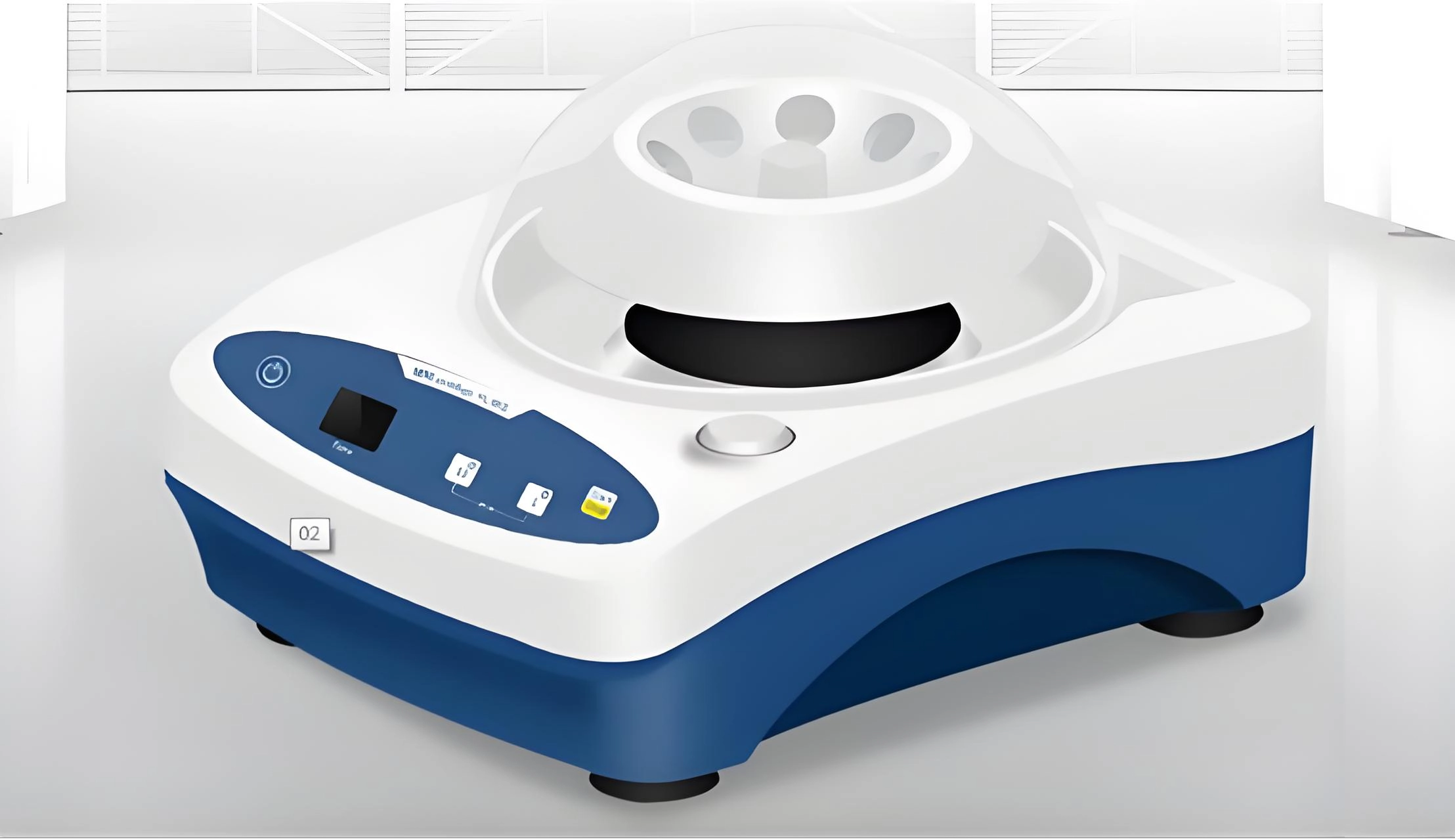
When you are ready to insert your samples, balancing centrifuge tubes with extreme precision is critical. Every single sample must be placed perfectly symmetrically across the axis of rotation, containing identical fluid volumes and densities. Running an asymmetrical load creates an unbalanced center of mass, generating intense vibrations that can shear the main drive shaft. Once the balanced components are seated, you must manually tighten the central locking nut before closing the lid. Securing this nut prevents the high-speed rotating assembly from decoupling and flying out of the protective chamber mid-run.
2. Dynamic Operational Limits and Speed Derating for High-Density Samples
Every piece of equipment has a strict physical boundary. To preserve the mechanical lifespan of the motor, your target speed setting must never exceed the factory-defined maximum centrifuge speed. Pushing the device past its operational threshold causes intense structural stress and heat generation. Furthermore, you must never attempt to override the lid lock mechanism or force open the main chamber door while the instrument is running or before the rotor has come to a complete, motionless standstill. Modern safety brakes require time to dissipate kinetic energy; forcing entry prematurely is a direct violation of basic laboratory centrifuge safety principles.
Advanced Expert Analysis from HAIJU LAB WARE: A frequent mistake in benchtop centrifuge operation is assuming that the stated speed rating applies to all fluids universally. Standard speed specifications are calculated based on a maximum sample specific gravity of 1.2 g/cm³. If the specific gravity of your fluid matrix exceeds 1.2 g/cm³, the structural load on the assembly increases exponentially. To protect the unit, the permissible maximum centrifuge speed must be mathematically corrected.
Operators should calculate the adjusted safe velocity limit using the following standard physics equation:
N=NMAX*(1.2/sample specific gravity) 1/2
Where:
N represents the corrected operating speed limit.
NMAX represents the absolute limit rotor speed defined by the manufacturer.
Sample Specific Gravity represents the measured density of your target fluid (g/cm^3).
By applying this derating calculation, you avoid over-stressing the aluminum or carbon-fiber composite materials, ensuring consistent, accident-free runs even when separating dense industrial muds or heavy chemical mixtures.
3. Firmware Troubleshooting, Duty Cycles, and Electrical Protection
Modern digital separation systems rely on complex microprocessor feedback loops. If the control panel displays an unexpected error code like 0.00 or alternative digital anomalies during setup, and the motor refuses to engage, the internal safety firmware has likely triggered a system freeze. Do not panic or press random keys repeatedly. Simply shut down the main power switch, pull the plug, and wait at least 10 seconds to allow the internal capacitors to discharge fully. Plug the unit back in and restart it. Once the monitor clears and displays your calibrated speed parameters, press the run key again, and the system will resume standard operations.
To maintain optimal thermal equilibrium inside the drive housing, HAIJU LAB WARE recommends limiting continuous operation to a maximum of 60 minutes per run. Allowing the motor a brief cooling interval between high-speed duty cycles prevents internal insulation degradation. Lastly, electrical infrastructure plays an important role in long-term safety. The unit must always be connected to a reliably grounded wall outlet to neutralize stray static charges. If the machine is scheduled for a period of inactivity, always unplug the power cable from the wall to insulate the sensitive digital components from unexpected grid voltage spikes. By integrating these careful habits into your facility's routine, you protect both your researchers and your equipment investment.

 EN
EN
