Understanding Laboratory Funnel Requirements
Selecting the correct funnel for specific laboratory procedures is a critical decision that directly impacts experimental accuracy, sample recovery, and overall laboratory safety. In professional research institutions, pharmaceutical development facilities, and industrial testing laboratories, operational requirements vary widely depending on whether technicians are handling aggressive chemical reagents, routine liquid transfers, or specialized gravimetric filtration tasks. Drawing from extensive practical experience in laboratory equipment management and workflow optimization, choosing the right tool requires a deep and comprehensive understanding of material compatibility, design specifications, and physical properties. Whether deploying a standard glass laboratory funnel or a specialized PTFE funnel for hazardous substances, each laboratory funnel must be chosen carefully to prevent contamination and ensure seamless liquid handling across diverse daily workflows. In busy analytical environments, an incorrectly specified funnel can introduce contamination, compromise phase separation, or cause severe sample loss during filtration. Therefore, establishing a structured funnel selection protocol based on chemical resistance, stem length, and particle size is essential for every professional laboratory to maintain high analytical standards. Furthermore, every single funnel deployed in critical workflows must undergo rigorous pre-check procedures.
Material Selection: PTFE versus Glass and Plastic
Material composition remains the primary consideration when evaluating labware durability, thermal stability, and chemical safety. According to materials science guidelines established by chemical engineering experts, Polytetrafluoroethylene (PTFE) offers exceptional resistance to strong acids, aggressive organic solvents, and high-temperature operating environments compared to traditional glass or standard laboratory plastics. For instance, when laboratories process highly corrosive chemicals, concentrated mineral acids, or volatile organic compounds, utilizing a high-grade PTFE funnel prevents chemical degradation and safeguards delicate sample integrity. Meanwhile, general-purpose aqueous applications often rely on durable plastic or borosilicate glass variants ranging from 50mm to 150mm sizes for routine liquid transfer tasks. Matching the precise chemical properties of your reagents with the appropriate funnel material guarantees long-term operational reliability and prevents unexpected equipment failure during sensitive chemical synthesis or analytical procedures. Furthermore, understanding the thermal expansion and mechanical strength of each material ensures that technicians can safely execute high-temperature filtrations without risking thermal shock or structural collapse of any funnel apparatus during critical research phases. Every selected funnel must be evaluated for chemical compatibility to ensure absolute operational reliability.
Matching Funnel Design to Specific Analytical Tasks
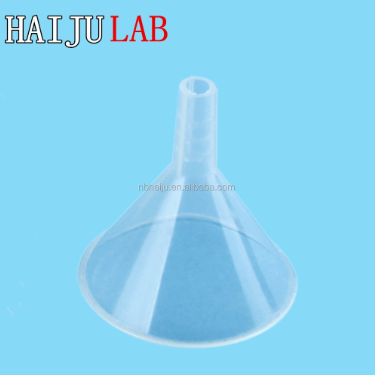
Different laboratory tasks demand specific funnel geometries to optimize filtration speed, phase separation efficiency, and ease of pouring. Analytical chemistry protocols frequently distinguish between short-stem funnels, long-stem funnels, and specialized powder funnels, each serving distinct functional purposes within the laboratory setting. When transferring fine powders, granular materials, or crystalline substances, a wide-stem powder design prevents clogging and ensures complete sample recovery without unnecessary loss. Conversely, liquid-liquid extraction, Büchner filtration setups, or gravimetric filtration procedures require precision-engineered stems that facilitate smooth, uninterrupted fluid flow without trapping disruptive air bubbles. By carefully analyzing the physical state of the working substance—whether it is a highly viscous liquid, a dense chemical suspension, or a fine dry powder—technicians can drastically reduce experimental errors and streamline everyday laboratory throughput. Selecting an appropriate funnel model with optimized internal angles and stem dimensions also eliminates turbulence, thereby accelerating filtration rates and improving the reproducibility of quantitative chemical analyses across multiple testing batches.
Evaluating Practical Guidelines for Daily Operation
Proper maintenance, rigorous cleaning protocols, and correct operational habits significantly extend the operational lifespan of laboratory funnels while ensuring strict compliance with analytical safety standards. Laboratory supervisors and senior technicians emphasize that personnel must inspect all glassware and polymer components for micro-fractures, surface scratches, or chemical wear prior to initiating each experiment. Furthermore, choosing the correct dimensional size—such as integrating standard 50mm to 150mm funnels for routine benchtop liquid transfers—prevents liquid overflow and substantially reduces accidental spillage risks in busy work environments. Establishing standardized cleaning and drying protocols immediately after experimental use prevents residue cross-contamination, ensuring that every funnel performs reliably across repeated analytical cycles in industrial, clinical, and educational settings alike. Proper storage practices, such as utilizing cushioned racks or dedicated drying pegs, further protect delicate funnel stems from mechanical impacts and chipping during routine laboratory storage and handling.
Ensuring Quality and Reliability with Haiju Laboratory
Sourcing reliable laboratory equipment from trusted manufacturers is essential for maintaining consistent experimental reproducibility across scientific research and industrial production applications. Haiju Laboratory provides a comprehensive selection of laboratory consumables and instruments, including specialized PTFE products, high-grade glass apparatus, and durable plastic funnels designed to meet rigorous professional performance standards. By adhering to strict manufacturing specifications, dimensional tolerances, and quality control measures, Haiju Laboratory ensures that each funnel delivers optimal performance, exceptional chemical resistance, and structural stability. Investing in dependable laboratory accessories allows modern research teams to focus entirely on precision analysis and breakthrough discoveries while maintaining a safe, compliant, and efficient working environment. Through continuous innovation and rigorous quality assurance, Haiju Laboratory remains a trusted partner for laboratories seeking uncompromising quality in their everyday scientific operations.

 EN
EN